9 Ways Ovid Can Teach You To Be a Better Lover this Valentine’s Day
Do you think about the Roman Empire? Sure you do. Does it bother your partner? Absolutely because they’re thinking about the Roman Empire too and you’re interrupting their flow. Around this time of year, do you start seeing all the hearts and candy and flowers and that huge Darth Vader in the grocery store holding a stuffed teddy and think to yourself, “What would Ovid say about all this?” Probably not.
But I did!
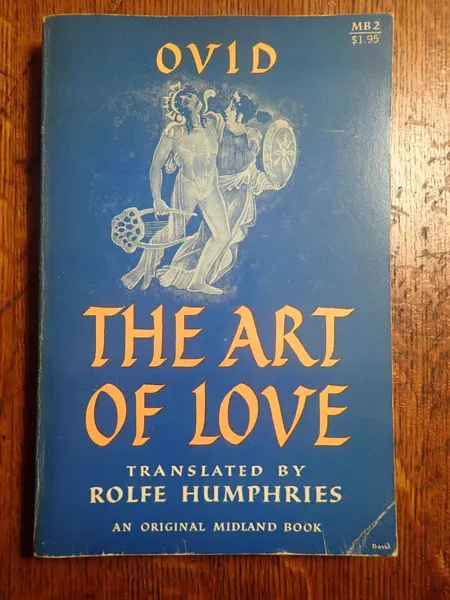
I thought that revisiting Ovid’s The Art of Love during the couple weeks leading up to our corporate celebration of love would be a great idea. What better way to celebrate the only day that cis men are allowed to have feelings other than anger or sadness (sadness, by the way, is only allowed during large sports events or when a grandmother passes away), I thought! Boy was my thinking on point for once. Perfect move. No notes.
To be candid, I learned nothing about whether Ovid would really dig Valentine’s Day. I can surmise how he’d react given his feelings on gifting (positive) and the advice he gives both men and women (mixed), but I didn’t come up with any definitive answers. I did learn that Ovid’s conversations about love are about as exciting as seeing the aura borealis in the southern US; real pretty but deeply concerning.
I first read this book 2008 or ’09 and recalled very little though the impression of it being out there stayed with me. One of the reasons that this book stayed is that it feels like a representation of a society or at least part of one. There’s not a ton of books that are as clear of windows into the past’s day-to-day desires or trysts. It feels very progressive and open-minded while also incredibly old fashioned in ways that fun house mirrors the way love, romance, sex, marriage, and dating happen in contemporary America. The fact that the author of Metamorphoses wrote a poetic guidebook to lovers along with poems about his affairs is, also, something that makes me deeply happy in ways I can’t fully describe in words.
The translation I read was from 1957. I’m interested in what more modern translations do with the material and what context they give around the book. There does seem to be some disagreement about whether Ovid was being “ironic” in these poems, poking fun at love poems of the time. I’d be keen to figure out where more people stand. That said, I’m not an Ovid scholar nor a scholar of that time period, so whether a lot of Romans were sleeping with each other’s wives/husbands is a mystery to me. Some of the references or jokes he makes probably did fly over my head. I did laugh multiple times throughout the reading, so there’s definitely some intended humor that I was able to latch onto.
Even so, I’m going to work with the following assumptions:
- Ovid’s writing is serious (re: intentional), even when it’s funny. I will assume that the intention is made clear in the writing and that it all isn’t an elaborate in-joke that I’m missing all the references to or context for.
- Even when Ovid has his tongue firmly imbedded in his cheek, I’m assuming that the things he describes were going on in some way, shape, or form during the time he wrote these poems. It wouldn’t make sense to write about guards keeping lovers away from married women unless there was some sort of actual similarity to the life being led at the time. He had an audience and they had to get what we was working with.
- I’m going to absolutely assume that all facts Ovid says about himself are true, especially when it comes to his ability or inability to pleasure other people’s partners. Why? Well, I’m having fun with it. This book feels like it’s mainly about fun.
Without further ado, here are the nine things you need to know about Ovid’s Art of Love (which also include his poems called The Loves which I’ll talk about first). Take notes. Learn from the master.
1. Be petty. For example: wish that your lover’s husband chokes at a party so you can hook up with them without him knowing.
This one is a good one and really does deserve some quoting. Here’s what the fourth poem in Book 1 of The Loves says:
“So, that husband of yours is going to be at the party—
Well, I hope he chokes; let him drop dead, who cares?
How am I going to act?—just stare at the girl I’m in love with,
Be just one more guest, let some one else feel your breast,
Let some one else put his arms around you whenever he wants to,
Sit at your side, rub knees, lean on your shoulder a bit?”
This man comes out swinging. Who would care if your husband drops dead? They’d probably be like, “God what a bore” and be totally cool about it. Then we’ll sneak away into a private room somewhere. Totally normal.
What romance! “For Valentine’s Day I hope your husband chokes.” I could see it on a card. Maybe one with a winking Ovid holding a fish bone? Oh my, should we make Ovid Valentine’s? Please someone partner with me.
Ovid Valentines Day Card: This Valentine’s Day, I hope your husband chokes to death.
2. Let your wife sleep with other people. Why? Because it’ll make you popular!
There are many ways to become popular, or so I’m told. I have very little experience with this “popularity” so I’m going to trust Ovid and let my partner sleep with whomever she wants. If it makes me more popular with the guys and in business? I mean…more money for tattoos! This really does feel like a win-win.
The fact that the poem has Ovid telling it to a guy whose wife he’s super into probably has nothing to do with it. Probably.
Ovid Valentines Day Card: Open Marriage? Open Possibilities for Business AND Friendship!
3. Can’t get it up? Write a poem about it.
Honestly, this part felt very funny while also weirdly honest. A whole poem about how he cannot believe he can’t get going to make love to someone feels cringy to type out. But there’s a bit here that was interesting.
He goes out of his way to blame himself, not the woman. Well, actually he personifies his *cough* friend *cough* and blames magic at one point, but never blames the woman. The beginning of the poem where he questions whether she’s ugly seems to suggest he will but he turns away from this pretty explicitly. Later he claims that she could have aroused an oak tree or a stone. Do you think she teaches class on how to do this?
The poem is very self-deprecating in ways that translate well to today. Who doesn’t love the self-aware comedian?
The end of the poem is what had me rolling where, finally, the woman tells Ovid he’s an ass for leading her on then not being ready to perform. As she wraps herself up in the blanket and storms off, she makes sure to make “a few spots on the sheet” so that the servants don’t think that no one touched her. We’ve all done embarrassing things to save face. Feels like the BCE equivalent of when you find out that your favorite influencer has a whole production team.
Ovid Valentine’s Day Card: You could move the great oaks, the most resolute iron, coax deaf stones, rouse any man living. Except for me.
4. Ladies: If a man promises you gifts and actually delivers? You give right back. Often.
If you have gone back to your notes screaming that I’m jumping around too much then all I have to say to you is that Ovid is unhinged and by Jupiter so will I be. We leap!
Which is basically what he says to women who catch a man that actually gives gifts: leap on him! I believe his directions call for the literal, pleasurable kind of leaping.
This part is a bit wild because it follows him giving advice to men which basically says, give gifts and you will get laid. Then he turns to women and says, “Once you get the gift? THEN you go buck wild.” Gifts are a big part of Ovid’s thing. Really a proto Valentine’s Day believer it seems.
Ovid does not comment on whether this would work in queer relationships though, my guess, and recall I’m not expert hence the reading Ovid, is that Ovid would approve. Ovid, or at least in this translation, doesn’t seem to venture too far outside a heterosexual binary. Which is unfortunate since his imagination of sneaking into different households each night while the husband is away, presumably, sneaking into a different household, really suggests an open understanding of desire.
Now that I think of it, I feel like this idea about gifts is how OnlyFans actually works. Huh. The things we learn reading books.
Ovid Valentines Day Card: My love definitely costs a thing. Two things to be precise.
5. Ladies: Don’t trust a man who’s slick with his words. He’ll probably lie about being with you.
Ovid as time traveler? Or are men really, still, the same little shits they were before Christ? Over two thousand years to evolve and men are still saying, “Yea, yea, Jessica and I totally did sex. It was awesome. I lasted like two hours straight man. Just did it for hours. It so awesome and totally moist. It was like cake, ya know? Awesome.” while other men pound their chest screaming That’s my boy because they can’t tell their friend they love him.
Too far? I’ve been reading Ovid! He’s passionately anti-asshole. It must have transferred over.
Still, good advice: don’t trust a man who speaks.
Ovid Valentines Day Card: That was too many words between gifts. Buh-Bye Brian.
6. Fellas: When your lover takes another lover, chill the fuck out.
Honestly? Great advice.
I felt like this was the best part in the part where he advises men. Much of it felt meh or not that funny or too referential to things he mentions doing himself in The Loves. He probably never meant for them to be read side by side. The references must be in same vein of “per my previous email” maybe with a little less snark. Or maybe like watching the remake right after the original and it’s just…not the same next to each other. Shiver.
The whole section to men is basically a whole bunch of ways to say, “chill the fuck out”. This one though? The best version. You can practically hear him two thousands years ago having a conversation with the dumbest man alive who’s angry that his lover hooked up with someone else while he was trying to hook up with his business partner’s wife (please see #2 above). Ovid must have rubbed his temples too hard because now mine hurt.
Ovid Valentines Day Card: To my lover’s lover—thanks for taking her out tonight, I needed to catch up on our show.
7. Fellas: Treat women like humans.
This is one of those moments where it feels like the advice Ovid is giving isn’t so much tongue in cheek as club in hand. Just repeating “Don’t be an idiot” until it sinks in.
A quote:
“Nothing in all I have said has more importance than this:
If she beckons, respond; let her alone if she’s writing;
Let her come and go whence and wherever she will.”
Straight forward and to the point. Literally, I think I could do those three things and be better than 68% of men. Yikes.
Ovid Valentine’s Day Card: Did you call for me? No? Okay, I’ll go back to letting you do whatever you want while I take care of everything else.
8. If your fingers are weird, maybe don’t talk with your hands.
This is advice Ovid gives women but it is a good sample of the absolutely wild shit that gets in here for all groups.
If you’re pale wear red. Ugly? Money helps. Take showers even if you’re hot. Don’t text back right away. Women don’t play games well so avoid them. If you’re tall don’t get on top. Cute butts need to be shaken. Fake the orgasm if it’ll bring the other pleasure.
But my favorite is if you have hideous looking fingers put ‘em in your pocket. I shall be talking less with my hands from now on.
Ovid Valentine’s Day Card: I promise to fake my orgasm to make you happy if you promise to fake yours.
9. Poets don’t have money. Don’t expect gifts.
Finally! The best advice Ovid can give to a potential lover of a poet: don’t expect gifts. It’s just not in the cards for us. Poets are good at other things though! Just not getting you things.
Phew. At least somebody said it. Thanks Ovid. I knew there was a reason I stuck this out.
Ovid Valentine’s Day Card: You asked me to write you a poem,/ and I didn’t. Instead I got this card/ which, actually, I stole because/ Threepenny Review never responded to my submission/ and the fiction writers asked/ if I’d go out drinking again which/ I did. If you get this before Sunday,/ please use the key attached/ to feed my cat.
A lot in this book is questionable. As mentioned above, the relationships are only between men and women, and the ways in which Ovid talks about women obviously doesn’t age well. The focus on beauty and male attention isn’t great. But like all wonderfully old things, there’s other parts that are good reminders for what we should be doing now.
The other thing that made me a little cringy was the incorporation of servants into many of the narratives. I’m going to say that this has to do with my ignorance more than anything else but I’m also in a space where anything involving someone who could afford a servant just doesn’t do it for me. Me problems. Yet, it was a difficult part to navigate and I’m sure there’s some good writing about class politics in ancient Rome. I will share my favorite servant related part: Ovid gives advice to women to make sure their servants are uglier than they are. Don’t want your lover thinking about anyone but you, ya know.
The cultural baggage in this book did fly over my head often but this is part of the deal reading something that has references only for that time. The translation I read didn’t help because the language felt like is was obfuscating rather than illuminating. I mean, I’m sure Ovid uses the word penis when he talks about not getting hard, but the 1950s Indiana University Press translation sure didn’t. I wonder if this would have elevated or deflated things more.
This is, I think, one of the joys and difficulties of reading older works. There are things that don’t really make much sense in a contemporary context which leaves blank spots. There’s also something beautiful in seeing the connections to now. The fact that “men ain’t shit” has been said in one way or another for over two thousand years is a lovely thing to leave with. It’s also wonderful to see the absolute chaos that is morality, permissibility, love, judgement, cultural expectations. The ways that we are judging far less and far more than Ovid would have, makes it all the more human.
And this too, is beautiful: even in this ancient world, people were loving each other and getting angry with their lovers and trying to sleep with each other and laughing and sneaking and holding complex emotions in their hearts. Even then, like now, love is expansive and consensual. If love can worm its way through slick words, gifts, erectile dysfunction, and the fall of empires, then it has survived more than I could ever dream to survive. I choose to take this away from Ovid’s The Art of Love. I choose to see Ovid, even when he’s giggling, asking us to broaden the possibilities of how our hearts can bring us closer to understanding each other.
And I choose to repeat that poets are not to be expected to give gifts. Like, let’s make sure this makes its way into the culture at large. Don’t expect a gift. In fact, could you spot me $25? There’s this open reading period that I want to submit to and I don’t get paid til the 15th. Venmo’s good. Check is fine. Cash is better.
If you're feeling extra in love with this website today, please share this with a friend and encourage them to sign up for a monthly essay on books, reading, writing, or all three! Signing up is completely free.
If you're feeling extra generous, you can help me purchase discount Valentine's candy by becoming a subscriber (for just $5 a month!) or tipping below. Thank you so much for reading.
 About the Author