Books of Our Time: The Difficulty of Writing Resistance in the Comics Spider-Man: Reign and Death of the Silver Surfer
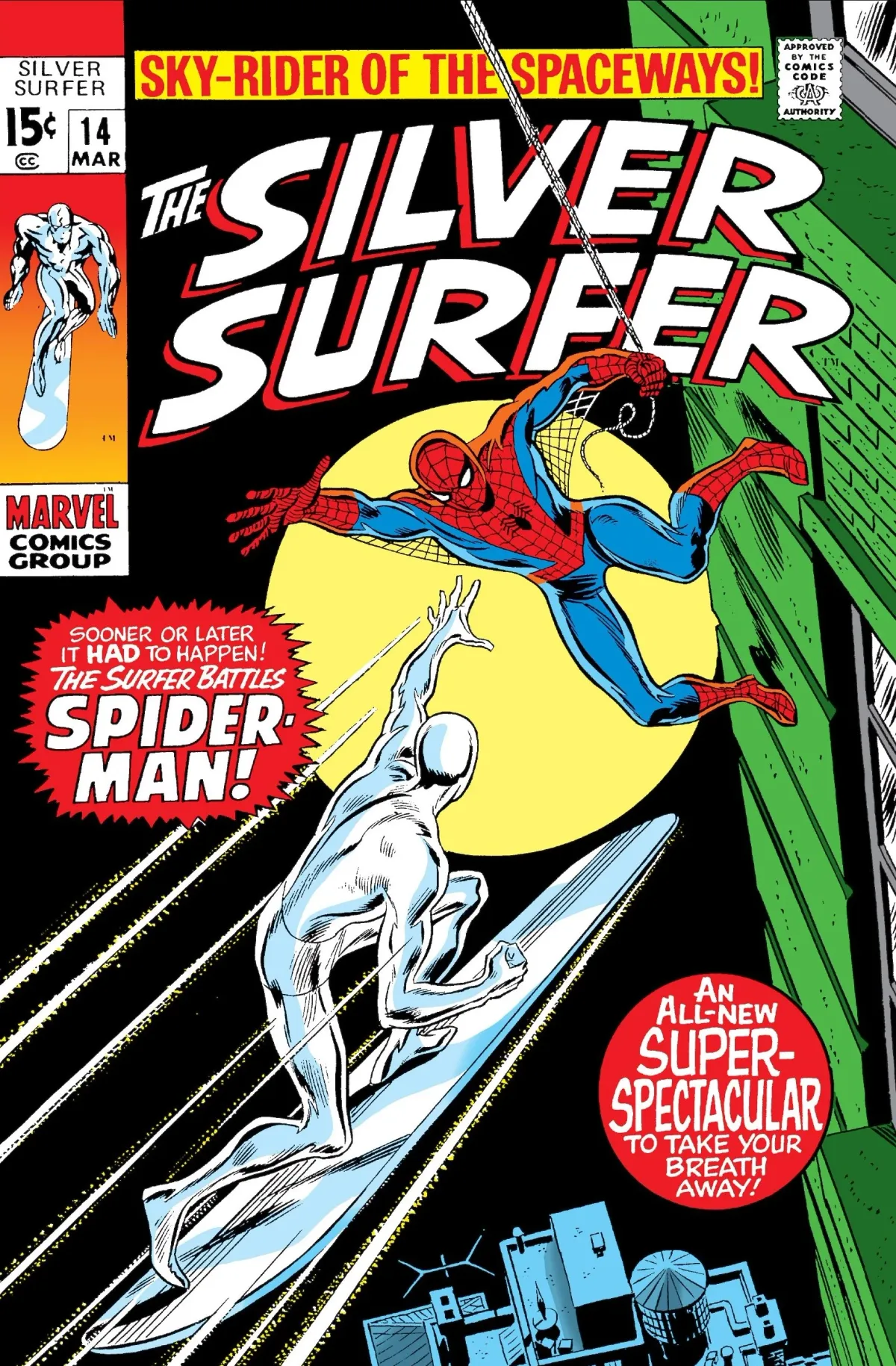
Welcome back to Widely Read’s Books of Our Time! This is an irregular look at things I’ve recently read that feel unusually prescient in today’s wild world. For this one, we’re looking at two different comic series, Spider-Man: Reign and Death of the Silver Surfer. While both of these series have finished their runs, the Spider-Man one was from almost 20 years ago while Silver Surfer ended in October of this year. They’re far apart in style and direct connection to contemporary events but both piqued my interest with some fun overlaps.
Note before we get moving: I won’t apologize for this title sounding like I’m about to present an academic paper at a comics conference. Mainly because I want to pretend I’m at a conference without having to use direct quotes. This is very much because my job is dealing with direct quotes right now and I’m quite tired. Also, for those who care, there will be spoilers. I’m always spoiling things, but I like to think it’s in the best way possible so stick around!
Like my own resistance to direct quotes in this essay, both of these comic series feature the idea of resisting a tyrannical governmental power explicitly. The Silver Surfer comic sets up our title character against an organization that’s bent on getting the “blood of Galactus” (you gotta love comics) to make sure that humans, read as the few humans with immense wealth and power, can murder any alien (non-Earthling), especially the Silver Surfer. In the Spider-Man comic, we enter a future where Spider-Man has stopped doing his thing and the NYC government is secretly led by Venom who wants to encase NYC in a web shield to “protect” New Yorkers but really is there to trap them (omg comics are great). Our heroes are the resistors in these comics and try to bring to heel the evil forces that are feeding off the pain of others.
What initially drew me to thinking about these comics together, besides happening to have read them both recently, is that they project an argument against forces in power and for those resisting them. Both also struggle with picturing resistance, stuttering into what change would look like. This, I think, makes it so connected to where we are at now as many political groups think about what a positive change in the U.S. would look like, with many unable to think beyond what has already been. Or, there’s the suggestion of a “return to normal” just before the awfulness we’re experiencing now as if the just before didn’t lead to the now.
Let’s start with the Silver Surfer because it’s most recent and because I think it is most directly struggling with presenting resistance. Written by Greg Pak with art by Sumit Kumar, Frank D’armata, and various others depending on the issue, this comic does an interesting job putting Silver Surfer into a situation where he is being hunted by the Bureau of Alien Neutralization (BAN) because he’s seen as a threat to Earth. Basically, he’s an alien and humans don’t really understand his power or purpose so they, obviously, choose to neutralize him. A little on the nose? Don’t worry it keeps coming like a baseball bat to the face (positive).
As these issues progress, we’re introduced to an absurdly wealthy head of BAN who is government but not really (whack) going after the aforementioned blood which will help fight the Silver Surfer. We also get introduced to Kelly Koh who is our main antagonist, potentially protagonist, who is kidnapping aliens (whack) because she thinks this will keep her family, primarily mother, safe (whack). Koh is clearly not being asked to go after people who are harming humans (whack) but instead just anyone who the Bureau has deemed “alien” (whack). This obvious connection to our current political moment is wonderful and far more than I’m seeing in some other contemporary comics.
It's clear in the issues that Silver Surfer is trying to do his best making the world a slightly better place. He’s taking responsibility and ownership of the power he has, using it for good. A great moment in the series is when he’s helping kids noting that, yea he just stopped a war, but he’s here now so he’s doing what he can where he’s at. This moment, I think, is a highlight of how this comic reaches out to say something. His kind act isn’t world shattering, though his power is world shattering, but it is the day-to-day kindness that he’s willing to engage in. In this scene, police arrive because parents overreact at a floating silver man and then the police overreact and fire at the kids who Surfer protects. Within the theme of overreacting, the kids then freak out because a silver dude matrixed some bullets with his mind. This added to an already wonderful scene because Surfer doesn’t regret doing what he was doing, he just leaves. Yea, his face is a bit annoyed, and I shared the annoyance, but he still did good. It also helps to see police not always presented as uniformly perfect, calm, wondrous, infallible humans.
Another example is later in the series when Surfer decides to fight back more explicitly and use all his power to stop a ship in space (I’m skipping a lot here purposefully, so go read it!). He refuses to kill in this moment too which is a wonderful touch. And another in the final issue where he sacrifices himself because he can, and should, to protect the world. These are moments that are truly on message. They show self-sacrifice and working hard towards stopping an oppressive system (in the genre of superhero comics with all its trappings) that is very closely reflective of the system many are pushing up against right now. This is good. I liked this a lot.
But it’s the scenes that lead up to Surfer really letting loose in space that also highlight the limits of how the comic presents resistance. Sure, Surfer is fighting back against the bad guys and giving Koh (the BAN agent mentioned above) every single opportunity to be a better person and do the right thing, but she struggles to do so. She finally does shift fully towards fighting her former employer when her mother dies because of actions taken by BAN. On the one hand, I see the narrative purpose of this. Koh is slowly moving away from her extremely prejudice beliefs around aliens and her history of intense, unnecessary violence. The death of her mother is the point at which she truly sees what she has wrought and supported.
Koh’s change does, technically, start before her mother’s death which complicates the conversation I’m having below. Through a connection to the Silver Surfer, she experiences the pain and abuse suffered by an alien she did violence to. She experiences the violence she performs on others which helps open her eyes to what her employer is asking her to do. This moment, though felt complicated to me because she was aware of what she was doing beforehand. She eagerly engaged in hurting others, even if she didn’t connect to them as living, conscious beings, and participated in the clear oppression of groups of people. All with gusto and great applause from her superiors. I struggle with this because the realization of her being wrong isn’t literally doing the wrong and seeing the pain and suffering, but being cosmically put in another’s shoes. It doesn’t feel like Koh has actually gone through a full process of her character shifting but once she says she was wrong, boom; she’s a good guy and the next Silver Surfer.
Which, to be honest, I’m into. I won’t pretend I didn’t read it and go, “Nice” like the Key & Peele meme. I like the idea of the Surfer’s powers being a humbling experience as in some earlier Silver Surfer comics. Plus, there’s a big opportunity here to have Koh come to terms with the immense amount of pain and suffering she’s caused while also having the power to actively change the circumstances around her.
Will that happen though? Will whoever picks up her character next actually put her through a redemption arc or are we left with the brief pages we get here? Because Koh is clearly the equivalent of an ICE agent and just knowing she was wrong gets her a pass. Is that enough? Is that equity? Is that actual forgiveness or kindness? Or is it giving a person gleefully participating in oppression and tyranny a pass because she isn’t the person in charge, even though she said yes to hurting others many times?
Truth is these questions are too much for a five-issue series that has other things to cover and more than this as an interest. I think Pak, et all do what they can with the space that’s given. But this still feels like holding back. Like forgiveness is easy, redemption a short speech away, the past something we forget quickly. To be even clearer, Surfer forgiving her makes sense as this is part of his deal but is she okay with what she’s done? Assuming she has changed, is she good with now having the Power Cosmic (essentially becoming the new Silver Surfer) without providing restitution to those she’s harmed? What does this say about how we, as readers, should treat people who have put themselves in Koh’s position?
This, to me, is what makes this comic, specifically, so relevant to now. We have to reckon with how we, as a community or society or family, treat people who are taking part in mass oppression. We have to ask ourselves what we’re doing now and, hopefully like the Silver Surfer, do the right thing. But we also will have a conversation about what to do with all those who have kidnapped people off the street, assaulted women and children, beaten people, tortured people held in captivity, refused to follow the law, refused to do what is right even if it is against the law, and woke up to do it all again the next day. Historically, we have ignored people who have done this and, too often, given them back their jobs as officers after some stern words. Now lots of people are paying attention though, so will forgiveness flow easily? Will we memory-hole it? Allow the people who did this violence back at our dinner table? We will have to own our choices and live with what comes afterwards. Death of Silver Surfer gives us one slightly hopeful version of what those choices could be.
This idea of owning our choices also gets explored in Spider-Man: Reign. This comic came out in 2007 and I had the luck of having the whole series in my TBR box of comics to read. This comic is written and drawn by Kaare Andrews with help from Jose Villarrubia. It takes place in a future NYC where Spider-Man is an old man who is no longer crime fighting. The city has been taken over by a private police force controlled by the mayor of the city who is controlled by Venom. Classic superhero stuff.
This story is much darker and has had more time to get people online moody about it. There’s a fair amount of criticism of this comic because of how closely it is a riff on Millar’s The Dark Knight and for how the comic discusses how Peter Parker (Spider-Man for the one person reading this who might not know) ends up accidentally poisoning his wife, Mary Jane, with his radioactive bodily fluids. To me, this is pure comics absurdity but is also an interesting point to jump into the idea of ownership of blame that is going on in this comic.
Here, Parker feels guilty about how he has caused the death of so many people around him. It plays into the classic death of his uncle that we’re all familiar with in the movies but, because this is a kind-of End of Spider-Man comic, it includes many other people in his life who he has indirectly harmed. Clearly, Parker is feeling guilty about the damage he’s caused and it has made him unable to do anything other than mope and suffer and flail at living. He blames himself for what he could not control but could have been more proactive about. The insertion of him and his wife trying to have children, to build a family, and instead him poisoning her is a choice, for sure, but one that gets into the idea that the intentions are good but the result is still bad.
This series pits Parker as his own worst enemy. He could be doing good in the now of the comic, helping people resist the fascist control that the city has been put under but instead he is stuck on what he’s, potentially, done wrong. Unlike the Silver Surfer and Koh, who are dealing with having to own the present, Parker is allowing the past to control him. He doesn’t take ownership of what he’s done but wallows in the guilt of it all. This juxtaposition in how the named superheroes are interacting with owning their responsibility is wonderful. Spider-Man is failing the responsibility part of the most famous phrase associated with the character and the comic is about how he tries to come back towards it.
While this is fascinating, the real thing that holds my attention isn’t related to Spider-Man’s journey. Early in the comic Spider-Man actually does something and beats up the oppressive private police force with some egging on from J. Jonah Jameson (who is trying to foment revolution to be on TV again? I guess the tent of resistance holds a lot of interesting characters and, also, comics are great). Once regular people see this moment of fighting back from Spider-Man, they start pushing back against their own oppression instead of passively taking it. This, truly, is what made this comic stand out to me because the comic’s most powerful moments have little to do with Spider-Man at all. His story is central but he doesn’t actually do much to resist in the series. The people who do all the work are the ones who saw the recognizable image of someone doing something and pushed for change. He’s an inflection, not the resistance itself.
The resistance itself is the kids who fight back bringing out a massive bell to fight Venom (amazing isn’t it?) and the adults who push back which happens between a lot of Spider-Man barely getting his pants on. It’s also in the moment when Sandman turns against the oppressors he’s been working for to help protect the children, making an absolutely huge sacrifice at the end that brings down the tyranny. The kids organizing, the ways that the police continue to oppress no matter what, and the eventual work that the community has to do was lovely. It was a group effort, not a single hero who did all the work with everyone else passive and grateful.
The connection between Koh and Spider-Man here feels obvious, though slightly different. Kelly Koh is a female Asian-American government agent, introduced in this series while Spider-Man is your regular Peter Parker Spider-Man. The quickness of their turn-arounds are similar but Koh’s experience is at least a new way of exploring this topic rather than "sad old man finally gets a little less sad". This context matters because even though both of these characters do a couple significant things that are broadly painted as them turning over a new leaf (Spider-Man straight up let fascism win because he was big sad), Koh rejecting her extreme xenophobic violence is something more significant, in my view, then finally putting back on a mask. So, I’m more unimpressed with the way Spider-Man is written because it feels even more “everything is fine now” than the Silver Surfer comic. I wish there was less a man figuring out he could be just slightly better than he was before and the world would be fixed, and more large groups of kids organizing in an abandoned church to take to the streets for revolution.
Where Silver Surfer seemed muddy and complicated, Spider-Man becomes simplistic at the end: It’s better because of this slight change back to the way it "always" was. One old dude finally figuring it out and, thank the Eternals, we’re all good. Meh. Blech, even.
Yet, I enjoyed both of these comics immensely. Partly because they struggled to hit the mark they seemed to set for themselves and partly because they both gave me hope. Their struggle feels like my daily struggle. How much do I resist? How much do I continue to fail or come up short? It feels impossible to quantify or manage. I saw parts of who I am and parts of who I want to be in many of the characters in these series. The comics also show the ways that resistance and fighting against actual oppression seep into our artistic hiveminds, allowing us to see more potential for action. There’s a limit here, of course. Being part of a big corporation owned by Disney of all places, puts a limit on what work you get through.
But, it’s the depictions of forgiveness and courage and collective action and doing the little things that you can where you can and the right choice in the pivotal moment and the shame of past actions and the realization that you’re doing harm then stopping, that make it all more than a silly story about an alien on a surf board or an old man slinging webs and one-liners. I mean I love comics, of course, but this is what engaging with art is all about for me; the ways that it makes you think, explore, find out more about yourself.
So, while these two comic series weren’t the most transformative I’ve ever read, they tried to carry a weight of relevance and meaning. Which feels like what we are all struggling to do in this moment, in our lives, always.
If you're enjoying my work please consider subscribing for free! There are tiered choices as well which can help keep my comic buying habit under control.
If you just want to spot me a new comic, there's a link to a donation below. Thank you for reading and supporting my work!
 About the Author